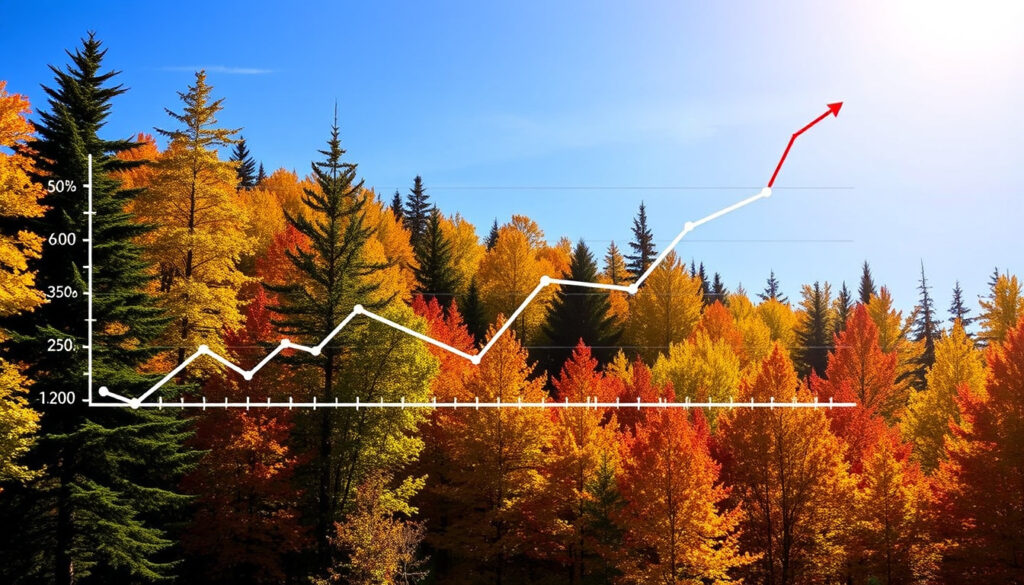
Inflation Rate Canada 2025 – 2.1% Average Nears BoC Target
Canada’s inflation rate in 2025 averaged 2.1% annually, marking the smallest increase since 2020 and bringing the Consumer Price Index closer to the Bank of Canada’s official 2% target, though underlying inflation pressures remain present. The central bank continues to navigate a delicate balance between supporting economic growth and maintaining price stability.
Statistics Canada reported that prices have risen 19.9% over the five-year period ending in 2025, reflecting the lingering effects of global supply chain disruptions and monetary policy responses to the pandemic. Core inflation measures, which exclude volatile food and energy prices, held steadier around 2.5% to 3% throughout much of the year, suggesting that basic cost pressures persist even as headline figures improve.
Financial analysts at TD Economics project that sustained low growth through 2026 should help maintain inflation near the 2% level, but acknowledge that energy price movements and international trade dynamics could introduce new pressures. The Bank of Canada’s preferred inflation gauges hovered between 2.6% and 3% as of late 2025, indicating that the journey to sustainable target achievement remains ongoing.
What Is the Projected Inflation Rate for Canada in 2025?
The annual average inflation rate for Canada in 2025 came in at 2.1%, according to Statistics Canada’s latest consumer price index release. This figure aligns closely with the Bank of Canada’s 2% target midpoint, though forecasts vary slightly depending on the data source and measurement approach used.
Key insights from the 2025 inflation picture include:
- Annual average CPI of 2.1% represents the smallest increase since 2020, down from 2.4% in 2024
- Core inflation excluding energy matched 2024 levels at approximately 2.6%
- The Bank of Canada cut interest rates to between 2% and 2.75% by mid-2025 to support growth
- TD Economics forecasts CPI remaining near 2% through 2026, with core reaching 2% by the first half of 2027
- About 38% of items in the CPI basket showed price increases above 3% annualized, down from 63% the prior year
- Energy prices showed volatility, with smaller declines contributing to a September rise to 2.4% year-over-year
- Total cumulative price increase since 2020 stands at 19.9%, reflecting the broader inflation episode
| Metric | Value | Period | Source |
|---|---|---|---|
| Headline CPI | 2.1% average | Full year 2025 | Statistics Canada |
| Headline CPI | 2.0% | October 2025 | Bank of Canada MPR |
| Core CPI | 2.6% | August 2025 | Trading Economics |
| Core CPI | 2.3% | February 2026 | Statistics Canada |
| CPI excluding food/energy | 2.4% | September 2025 | RBC Economics |
| Historical core average | 2.26% | 1984-2026 | Statistics Canada |
What Is the Current Inflation Rate in Canada?
As of early 2026, Canada’s inflation trajectory shows signs of stabilization near the central bank’s target, though recent data reveals continued month-to-month variability. The latest figures indicate that while headline inflation has largely normalized, underlying price pressures persist in certain sectors of the economy.
Latest Monthly CPI Readings
Headline CPI stood at approximately 2% in October 2025, with the underlying core measure running at about 2.5%, according to the Bank of Canada’s Monetary Policy Report. However, a notable uptick occurred in April 2026 when headline inflation reached 3.3% year-over-year, marking the highest level in 21 months and raising questions about the sustainability of the disinflation trend.
The April 2026 reading of 3.3% represents a significant deviation from the preceding months of relative stability. Analysts at National Bank attributed this spike primarily to energy price movements and base effects from the previous year. This development highlights the ongoing vulnerability of Canada’s inflation profile to external price shocks.
The Bank of Canada’s preferred trimmed-mean measures, known as CPI-trim and CPI-median, continued to hover around 3% as of September 2025, with three-month averages settling near 2.6% to 2.7%. These metrics strip out the most volatile components and are considered reliable indicators of underlying inflation momentum.
What Drives the Current Inflation Picture?
Several competing forces shape the present inflation environment. Downward pressures emanate from the cumulative effect of interest rate increases implemented between 2022 and 2023, the removal of the federal carbon tax, softening economic growth, and temporary GST holiday measures. These factors work to moderate price increases across the economy.
Counterbalancing these forces, upward pressures remain present. Energy prices, particularly oil, have shown renewed strength, while the pass-through of elevated mortgage interest costs continues to affect housing-related expenses. Global trade shifts and potential tariff implementations could introduce additional cost pressures, according to TD Economics analysis.
What Is the Bank of Canada’s Inflation Target and Timeline?
The Bank of Canada operates under a flexible inflation-targeting framework that defines price stability as achieving and maintaining the 2% inflation rate over the medium term. The official control range spans 1% to 3%, with the 2% midpoint serving as the target midpoint that guides monetary policy decisions.
When Will Inflation Return Sustainably to Target?
The Bank of Canada’s October 2025 projections indicate that achieving a sustained return to the 2% inflation target remains the central policy objective. According to official forecasts, total CPI should stabilize near 2% by late 2025 or early 2026, while core inflation is expected to ease to target levels by the first half of 2027. This timeline reflects the central bank’s caution about declaring victory prematurely given lingering price pressures.
The Bank of Canada initiated a rate-cutting cycle in mid-2024, reducing the policy interest rate from 5.25% to approximately 3.5% by December 2024. Further cuts brought rates to the 2% to 2.75% range by mid-2025, with additional reductions anticipated as inflation moves closer to target. These adjustments aim to support economic growth without reigniting inflationary pressures.
How Interest Rates Influence Inflation Outlook
Monetary policy works with a lag, typically spanning 18 to 24 months before rate changes fully flow through to the broader economy. The rate increases implemented between 2022 and 2023 have cooled demand across multiple sectors, particularly housing and consumer spending. As these effects compound, they provide tailwind for continued disinflation.
The central bank faces a delicate balancing act. Cutting rates too aggressively risks rekindling inflation, while maintaining restrictive policy too long could unnecessarily depress economic activity. The Bank of Canada’s communications emphasize that future rate decisions will depend heavily on incoming inflation data and evolving global conditions.
What Is the Historical Timeline of Inflation Rates in Canada?
Canada’s recent inflation experience follows a pattern familiar to many developed economies, characterized by a sharp pandemic-era surge followed by a gradual return toward normal levels. Understanding this trajectory provides essential context for interpreting current conditions and future expectations.
From Pandemic Lows to Post-Pandemic Peaks
Pre-pandemic inflation had remained subdued throughout much of the 2010s, routinely running below the Bank of Canada’s 2% target. The COVID-19 pandemic disrupted this pattern temporarily, with massive fiscal transfers and supply chain constraints combining to push prices higher beginning in 2021. By mid-2022, headline CPI peaked at 8.1%, the highest level in nearly four decades.
Core inflation followed a similar trajectory, reaching 6.2% in June 2022 as measured by Trading Economics data. The Bank of Canada responded aggressively, hiking the policy rate from near zero to 5.25% by July 2023. This represented the most rapid tightening cycle in the institution’s modern history.
Key Milestones in Canada’s Inflation Journey
- 2020-2021: Inflation remained subdued, often below 2%, as pandemic disruptions initially deflationary
- 2022: CPI surged to 8.1% peak (June); core reached 6.2%
- 2023: BoC hiked to 5.25% (July); inflation began declining from peak
- 2024: Annual average CPI 2.4%; core held at 2.6%; BoC began cutting rates
- 2025: Annual average CPI 2.1%; lowest since 2020; rates cut to 2-2.75%
- 2026: February CPI 2.3%; April spike to 3.3%; core at 2.3%
The 21-month high of 3.3% recorded in April 2026 underscores that inflation remains above target and susceptible to reversal. While the Bank of Canada maintains credibility in guiding inflation back to 2%, the data demonstrates that temporary factors can produce significant month-to-month volatility around the underlying trend.
What Information Is Confirmed and What Remains Uncertain?
Confirmed Information
- 2025 annual average CPI: 2.1%
- Bank of Canada target: 2% midpoint
- Bank rate reached 5.25% in July 2023
- Bank rate cut to 3.5% by December 2024
- Core CPI historical average (1984-2026): 2.26%
- Peak headline CPI of 8.1% occurred in June 2022
- 2026 February CPI reading: 2.3%
Information Requiring Caution
- Precision of future inflation projections
- Impact of potential tariff implementations
- Oil price trajectory for remainder of 2026
- Exact timing of return to 2% sustained target
- Whether April 2026 spike represents trend reversal
- Effect of ongoing trade policy uncertainty
- Residential mortgage interest pass-through timing
Data reflects reports available through April 2026, and projections may shift based on unforeseen economic developments, according to Statistics Canada. Trade policy changes, energy market disruptions, or unexpected domestic economic shocks could alter the inflation trajectory in ways that current forecasts do not fully anticipate.
Understanding Canada’s Inflation Context
Canada’s inflation performance must be understood within the broader global context. Major economies worldwide experienced unprecedented price pressures following the pandemic, with supply chain disruptions, fiscal stimulus, and labor market imbalances combining to push inflation to multi-decade highs. The Canadian experience, while significant, followed patterns observed in the United States, European Union, and other G7 nations.
The Bank of Canada’s 2% target represents an internationally recognized standard for price stability. This framework provides businesses and households with predictable inflation expectations that support long-term planning and wage negotiations. Achieving this target sustainably distinguishes Canada’s monetary policy success from temporary price moderation.
Examining specific components reveals the uneven nature of price pressures across the economy. While energy prices have moderated significantly from their 2022 peaks, and food price inflation has cooled, certain service-sector categories continue to show elevated readings. Mortgage interest costs, in particular, remain substantially higher than their pre-2022 levels, reflecting the lagged effects of previous rate increases on floating-rate mortgages and the renewal of fixed-rate mortgages at higher rates.
What Do Official Sources Say About Canada’s Inflation?
The Bank of Canada’s Monetary Policy Report provides the most authoritative analysis of current and projected inflation dynamics. The October 2025 edition noted that total CPI had returned to approximately 2% while core measures remained near 2.5%, describing the environment as one of gradual normalization amid trade disruptions and elevated cost pressures.
The Bank of Canada remains committed to returning inflation sustainably to the 2% target. The path forward will be influenced by global developments, domestic demand conditions, and the evolution of price expectations.
— Bank of Canada, Monetary Policy Report
Statistics Canada, as the national statistical agency, publishes the official CPI data that forms the foundation of all inflation analysis in Canada. Their monthly Consumer Price Index releases provide detailed breakdowns by component and geographic region, enabling granular understanding of price movements across the economy.
TD Economics analysis provides independent forecasting from a major Canadian financial institution. Their long-term forecast models suggest that below-trend economic growth through 2026 should help maintain CPI near 2%, though upside risks from energy prices and potential tariff impacts warrant monitoring.
Key Takeaways on Canada’s Inflation Rate in 2025
Canada’s inflation rate in 2025 averaged 2.1%, representing meaningful progress toward the Bank of Canada’s 2% target but not yet achieving sustained convergence. Core inflation measures continue to run slightly above the headline rate, suggesting residual price pressures in underlying cost structures. The April 2026 spike to 3.3% demonstrates that the disinflation trend remains vulnerable to reversal by external shocks, particularly in energy markets.
Monetary policy has played a central role in cooling inflation, with the Bank of Canada implementing significant rate increases between 2022 and 2023 followed by a gradual easing cycle. The policy rate now sits in the 2% to 2.75% range, and further cuts are anticipated as conditions warrant. However, the transmission of monetary policy to final prices operates with lags, meaning that the full effects of recent adjustments continue to work through the economy.
Looking ahead, sustained achievement of the 2% inflation target depends on continued balance between supportive growth policies and maintaining price stability. External factors including global trade conditions, energy markets, and housing sector dynamics will influence the path forward. Consumers seeking deals on groceries and household essentials may find value in reviewing local weekly promotions such as the No Frills Flyer Edmonton – Weekly Deals April 9-15 to manage expenses during this period of gradually easing inflation.
Frequently Asked Questions
How does Canada’s inflation compare to other countries?
Canada’s 2025 annual inflation rate of 2.1% places the country among the lower-inflation developed economies. The United States saw slightly higher average inflation, while European nations experienced varied outcomes depending on their monetary policy responses and energy dependency.
What is CPI and how is it calculated?
The Consumer Price Index measures changes in the price level of a basket of consumer goods and services purchased by households. Statistics Canada calculates it by comparing the cost of this fixed basket over time, with weights based on household spending patterns.
Why does core inflation differ from headline inflation?
Core inflation excludes volatile components like food and energy, which can swing significantly from month to month due to seasonal factors or commodity market fluctuations. This provides a clearer picture of persistent price pressures.
How does the Bank of Canada control inflation?
The Bank of Canada influences inflation primarily through the overnight interest rate. Higher rates reduce borrowing and spending, cooling demand and eventually moderating price increases. Changes to the policy rate take 18-24 months to fully affect inflation.
What was Canada’s highest inflation rate?
Canada’s headline CPI peaked at 8.1% in June 2022, the highest level since 1983. This occurred amid global supply chain disruptions, pandemic-era fiscal stimulus, and energy price surges following geopolitical developments.
How often is CPI data released in Canada?
Statistics Canada releases CPI data on a monthly basis, typically around the 20th of each month. The release includes detailed breakdowns by component, region, and special aggregates like core inflation measures.
What factors could push inflation higher in 2026?
Potential upside risks include energy price spikes, tariffs raising import costs, mortgage interest pass-through continuing to affect housing costs, and global trade disruptions. Weaker than expected economic growth could offset some of these pressures.
Is 2% inflation considered healthy for an economy?
Yes, most central banks, including the Bank of Canada, target around 2% inflation as consistent with price stability. A moderate, predictable inflation rate allows for relative price adjustments while minimizing the distortions associated with high inflation.
More related posts
 How Old Is the Sun – Age, Methods and Lifespan Explained
 Elsie MacGill Secondary School – Location Programs Enrollment Guide
 New Balance Fresh Foam 1080: Review, Specs & Comparisons
 Home Depot Thunder Bay – Store Hours and Directions
 Silk and Snow Mattress Review: Lab Scores, Reddit Reviews
 Drunk Raccoon Found Passed Out in Virginia Liquor Store
 Cast of the Batman – Full Actors and Roles Guide
 Canada Post Tracking Number on Receipt: How to Find It