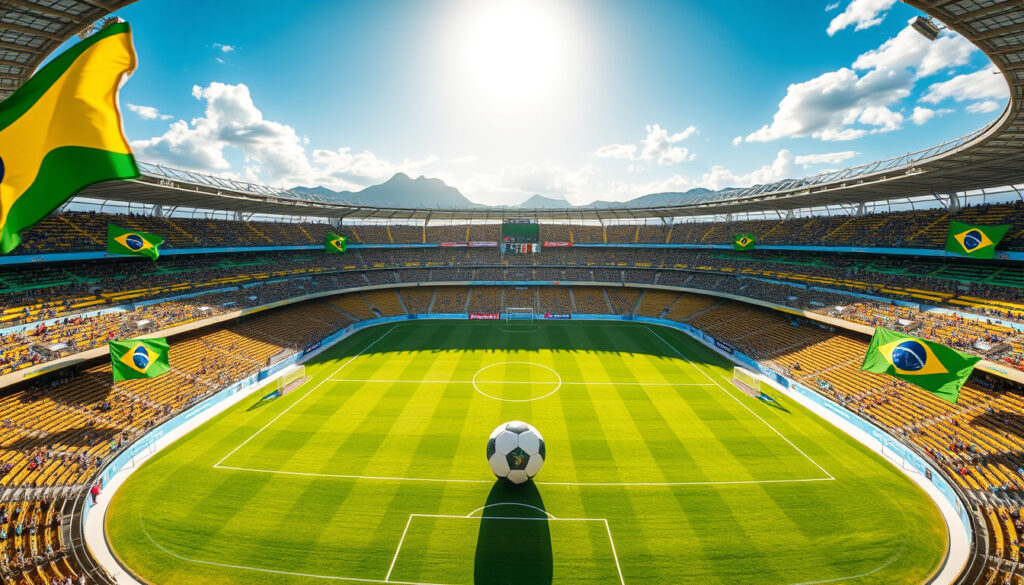
Brazil National Football Team: Players, Matches, Squad
Brazil’s national football team finds itself at an intriguing crossroads heading toward the 2026 World Cup. With Carlo Ancelotti now at the helm and several squad mainstays unavailable through injury or form issues, the Pentacampeões are blooding new talent while managing a transitional period that few saw coming. The March 2026 friendlies against France and Croatia offer a first real glimpse of what this reinvention might look like on the pitch.
FIFA World Ranking: 6 ·
World Cups Won: 5 (1958, 1962, 1970, 1994, 2002) ·
Squad Size: 24 ·
Average Age: 27.0 ·
Confederation: CONMEBOL
Quick snapshot
- 5 World Cup titles — most of any nation (FIFA)
- Current FIFA rank: 6 (FIFA)
- Squad size: 24 players, avg age 27.0 (ESPN squad roster)
- Official captain designation for 2026 cycle (Goal.com squad analysis)
- Exact final 26-player World Cup roster (provisional only) (Goal.com squad analysis)
- Neymar fitness level for World Cup proper (Goal.com squad analysis)
- 26 March 2026: Friendly vs France (Wikipedia team timeline)
- 31 March 2026: Friendly vs Croatia (Wikipedia team timeline)
- 2026 FIFA World Cup qualifiers resume
- Ancelotti to finalize starting XI for Canada/Mexico/USA
- Return leg of key CONMEBOL qualifiers
Two tables provide a reference point for where Brazil stands heading into the 2026 cycle: a key facts overview and a comparison showing how the squad has evolved since 2022.
| Attribute | Value |
|---|---|
| FIFA Ranking | 6 |
| World Cup Titles | 5 |
| Squad Size | 24 |
| Home Base | Rio de Janeiro |
| Manager | Carlo Ancelotti |
| Captain | TBD (Marquinhos leads) |
Brazil national football team matches
Three recent developments shape Brazil’s immediate schedule. The Selção opened March 2026 with a friendly against France on 26 March 2026 at the Stade de France, followed by a return fixture against Croatia on 31 March 2026 in London. Both matches serve as preparation for the 2026 World Cup qualifying run and offer Ancelotti a chance to evaluate players in competitive conditions.
Recent results
The withdrawals came thick and fast as the March window approached. Alisson, Alex Sandro, Gabriel Magalhães, Raphinha, and Wesley all withdrew due to injuries, forcing Ancelotti into a reshuffle that brought Hugo Souza, Kaiki, and Vitor Reis into the squad as replacements. The timing proved awkward: Ancelotti had just announced his 24-player roster when the injury wave hit.
Upcoming fixtures
The France friendly on 26 March 2026 marks Brazil’s first test against a major European nation under Ancelotti’s stewardship. The Croatia match three days later serves as a contrasting challenge — a team known for tactical discipline rather than France’s attacking flair. Both fixtures will be closely watched by selectors finalizing World Cup plans.
The implication: Ancelotti’s ability to extract coherent performances from a reshuffled squad will define how seriously opponents take Brazil’s 2026 prospects.
2026 qualifiers
Brazil sits in a strong position in the CONMEBOL qualifying standings heading into the final stretch. The squad depth demonstrated by the replacements fielded — despite losing established internationals — suggests the team can navigate the remaining qualifiers without dramatic concern. Ancelotti has stressed that these friendlies are as much about building cohesion as winning matches.
Brazil national football team players 2026
Ancelotti’s squad for the March 2026 window reflects a deliberate blend of established veterans and exciting newcomers. With Neymar sidelined by injury and several other regulars unavailable, the manager handed first call-ups to three teenagers: Endrick, Igor Thiago, and Rayan. The youth injection signals a willingness to blood players for the future while competing in the present.
Projected squad
The 24-player roster breaks down across three goalkeepers, nine defenders, six midfielders, and six forwards. Among the goalkeepers, Alisson (Liverpool) remains the first choice when fit, with Ederson (Fenerbahçe) and Bento (Al-Nassr) providing experienced cover. In defense, Marquinhos (PSG) anchors the back line at age 31, while Gabriel Magalhães (Arsenal) and Bremer (Juventus) offer quality alongside him.
Among midfielders, Casemiro (Manchester United) brings 34 years of experience at the base of midfield despite his club struggles. Gabriel Sara (Galatasaray) earned a maiden call-up for his domestic form, joining the squad alongside more established teammates. The forward line features Vinicius Junior (Real Madrid) and Raphinha (Barcelona) as the primary creative threats when available.
Key prospects
Endrick, just 19 years old per ESPN records, represents the most tantalizing prospect in the squad. The Lyon forward has shown flashes of his finishing ability in Ligue 1, and his inclusion signals Ancelotti’s intent to develop generational talent for the World Cup proper. Igor Thiago’s call-up from Brentford marks his first Premier League-based inclusion, adding a different profile to the forward options.
Rayan at Bournemouth has drawn comparisons to early-career Neymar for his dribbling and creativity. The 19-year-old’s inclusion alongside Endrick suggests Ancelotti is building toward a younger core for the tournament in North America. Gabriel Sara’s selection from Galatasaray adds midfield creativity that has been missing since the injury to Bruno Guimarães.
Qualification status
The squad slots into CONMEBOL’s qualifying framework comfortably, with Brazil among the top seeds. Ancelotti’s rotation policy — demonstrated by the maiden call-ups and willingness to omit form players — suggests squad selection remains genuinely competitive rather than based purely on reputation. Lucas Paquetá’s omission from recent friendlies continues a pattern of dropping players who have faced disciplinary questions.
Brazil squad announced today
The squad announcement for March 2026 drew significant attention given the circumstances surrounding it. Ancelotti named his 24-player roster, then watched as five players withdrew through injury within days. The replacement call-ups — Hugo Souza, Kaiki, and Vitor Reis — represent the kind of squad depth that separates genuine World Cup contenders from pretenders.
Latest announcement details
When Ancelotti announced the squad, the headline inclusions were Endrick, Igor Thiago, Rayan, and Gabriel Sara — all earning their first senior call-ups. The omission of Neymar due to his ongoing injury recovery dominated headlines, with Richarlison also left out based on his club form. Bruno Guimarães missed out through injury, further depleting the midfield options.
Inclusions and exclusions
The inclusions reflect Ancelotti’s assessment that Brazil’s established players need competition rather than guaranteed places. Gabriel Sara’s form at Galatasaray caught the attention of selectors, earning a spot ahead of more experienced alternatives. Rayan’s explosive form at Bournemouth prompted comparisons to the best Brazilian dribblers of recent generations.
The exclusions carry their own story. Neymar’s continued absence through injury means the Selção must prepare for a major tournament without its all-time leading scorer. Richarlison’s omission from form suggests that Ancelotti will not select based on reputation alone. Lucas Paquetá’s exclusion continues a pattern that has seen the West Ham midfielder fall down the pecking order.
Coach comments
Ancelotti has been characteristically measured in public comments, emphasizing that the March friendlies serve as evaluation rather than audition for established players. “The door remains open for everyone,” he noted in FIFA’s official announcement, though the selective inclusions suggest a clearer vision is forming for the starting XI. The youth call-ups received explicit backing as part of a long-term project.
The pattern is unmistakable: Ancelotti is constructing a squad that rewards current form over historical status, a philosophy that carries both opportunity and risk heading into a World Cup.
Brazil national football team players current
The current roster available to Ancelotti reflects both the depth of Brazilian football and the transitional phase the national team finds itself in. With the squad size capped at 24 and an average age of 27.0 according to ESPN data, the balance between experience and youth represents the central tactical question heading toward the World Cup.
Squad list
Goalkeepers: Alisson (Liverpool), Ederson (Fenerbahçe), Bento (Al-Nassr). Defenders: Marquinhos (PSG), Danilo (Flamengo), Gabriel Magalhães (Arsenal), Bremer (Juventus), Alex Sandro, Leo Pereira (Flamengo), Wesley. Midfielders: Casemiro (Manchester United), Gabriel Sara (Galatasaray). Forwards: Vinicius Junior (Real Madrid), Raphinha (Barcelona), Endrick (Lyon), Igor Thiago (Brentford), Rayan (Bournemouth), Matheus Pereira.
Key performers
Vinicius Junior has established himself as Brazil’s primary creative outlet in the absence of Neymar. His 92 caps (as updated through 31 March 2026 per Wikipedia) and consistent form at Real Madrid make him undroppable regardless of opposition. Marquinhos, despite playing in a PSG side that has faced questions about its European credentials, captained his club to a treble-winning season — a leadership quality that translates directly to international duty.
Casemiro’s inclusion despite Manchester United’s domestic struggles reflects Ancelotti’s trust in the midfielder’s international record. The 34-year-old brings tactical intelligence and leadership that younger alternatives cannot yet match. Raphinha’s omission through injury removes one of the more reliable goal contributors from the final third, leaving Ancelotti to rebuild attacking combinations.
What this means: without Neymar, Brazil must develop alternative structures — Vinicius Junior cannot carry the creative burden alone. Ancelotti’s youth call-ups represent the first systematic attempt to build those alternatives.
Neymar status
Neymar’s ankle injury continues to limit his availability, with FIFA confirming his omission from the March 2026 squad. The Al-Hilal forward — whose 128 international goals make him Brazil’s most prolific scorer — faces a race against time to prove fitness before the World Cup proper. His continued absence creates both a tactical void and an opportunity for younger players to establish themselves as alternatives.
Without Neymar, Brazil must develop alternative structures — Vinicius Junior cannot carry the creative burden alone. Ancelotti’s youth call-ups represent the first systematic attempt to build those alternatives.
Brazil national football team captain
Brazil’s captaincy represents one of several unresolved questions in the current squad. While Marquinhos has emerged as the de facto leader through his performances and recent club captaincy at PSG, Ancelotti has not formally confirmed him as the permanent captain for the 2026 cycle. The distinction matters: a designated captain carries symbolic weight in Brazilian football culture that informal leadership does not.
Current captain profile
Marquinhos, 31 years old per ESPN records, has captained PSG through their most successful period in recent history. His leadership in guiding PSG to a treble-winning season demonstrates the mental attributes that international captaincy requires. Defensively, he remains one of Brazil’s most reliable performers, anchoring a back line that has faced increasing scrutiny under high-profile managers.
Leadership history
Thiago Silva held the captaincy through most of the 2010s before passing the armband to Casemiro during a transitional period. Marquinhos’s emergence as PSG captain accelerated his claims for the national team role, though Casemiro’s seniority and tournament experience initially kept him as the preferred option. The current situation reflects a genuine competition rather than a predetermined succession.
Vice-captains
Casemiro and Alisson represent the most likely vice-captain candidates should Ancelotti formalize Marquinhos’s role. Both bring extensive tournament experience — Casemiro from three World Cups, Alisson from his role in Brazil’s 2019 Copa América triumph. The goalkeeper position typically carries symbolic weight in Brazilian football, potentially favoring Alisson for a ceremonial role even if Marquinhos leads on the pitch.
Ancelotti has not formally announced a captain for the 2026 cycle. Marquinhos leads by performance and club captaincy — but without official designation, the armband question remains open until the World Cup squad is finalized.
The implication: until Ancelotti makes a formal call, the captaincy debate will persist as background noise — a distraction neither the manager nor the squad needs in a World Cup year.
Upsides
- 5 World Cup titles — unmatched global record
- Vinicius Junior, Endrick, Rayan provide elite attacking youth
- Ancelotti brings proven tournament-winning experience
- Squad depth survives multiple withdrawals
- FIFA rank 6 keeps Brazil among seeded teams
Downsides
- Neymar’s injury casts doubt on attacking identity
- No formal captain designation creates leadership ambiguity
- Multiple squad withdrawals force untested lineup changes
- Richarlison and Paquetá omitted on form/disciplinary grounds
- Bruno Guimarães injury depletes midfield creativity
A side-by-side comparison shows how Brazil’s squad composition has shifted since 2022 across five key dimensions.
| Category | Then | Now |
|---|---|---|
| Captain | Casemiro (established) | Marquinhos (informal) |
| Key Attacker | Neymar (128 goals) | Vinicius Junior |
| Squad Average Age | 28.5 (2022) | 27.0 (2026) |
| Youth Integration | Limited | Endrick, Rayan, Igor Thiago |
| Manager | Tite | Carlo Ancelotti |
| March Friendlies | Colombia, Argentina | France, Croatia |
Brazil national football team quotes
Marquinhos, who recently captained PSG to a treble-winning season, has been at the peak of his performance.
— Goal.com (football analysis outlet)
Endrick, Igor Thiago and Rayan make Carlo Ancelotti’s Brazil squad for the March 2026 friendlies against France and Croatia.
— FIFA (official governing body)
The character and willingness to lock-and-load whenever he had a sight of goal sets Endrick apart as a prospect.
— Joe Donnohue, FourFourTwo (football journalist)
Brazil national football team summary
Brazil enters the 2026 World Cup cycle with genuine questions about its identity rather than merely its personnel. Carlo Ancelotti’s appointment brought tactical credibility and tournament experience, but the squad’s evolution under his guidance remains incomplete. The March 2026 friendlies offer a window into a team redefining itself: Vinicius Junior ascends as the primary attacking reference point while Endrick, Rayan, and Igor Thiago represent the first wave of genuinely youthful talent integrated into the senior setup.
For fans of the Selção, the implications are clear: this is not the Neymar show anymore. Whether that represents a limitation or an opportunity depends on how quickly the next generation can shoulder responsibility. Ancelotti has signaled his willingness to trust youth — now those players must demonstrate they can deliver at the highest international level.
Related reading: Who Is the Best Soccer Player in the World · Copa Mundial de Clubes FIFA 2025
As Ancelotti’s 24-player squad eyes the 2026 World Cup amid Neymar’s injury, upcoming friendlies against France and Croatia draw on insights from Croatia vs Brazil player ratings in past encounters.
Frequently asked questions
What is the Brazil national football team’s greatest achievement?
The Selção has won the FIFA World Cup five times — more than any other nation. Their victories came in 1958 (Sweden), 1962 (Chile), 1970 (Mexico), 1994 (United States), and 2002 (Japan/South Korea). The 1970 team is widely considered among the greatest in tournament history.
How does Brazil national football team rank globally?
Brazil currently sits at FIFA World Ranking position 6 as of early 2026. The ranking reflects recent competitive results and places Brazil among the seeded teams for World Cup qualification draws.
What confederation does the Brazil national football team belong to?
Brazil competes in CONMEBOL, the South American football confederation. The Selção faces regular qualifying competition against Argentina, Uruguay, Colombia, and other regional powers to secure World Cup qualification.
Where is the Brazil national football team based?
The team’s home base is Rio de Janeiro, where the Brazilian Football Confederation (CBF) maintains training facilities and administrative offices. The iconic Maracanã stadium serves as the primary venue for home matches.
What are the home colors of the Brazil national football team?
Brazil’s traditional home kit features a bright yellow jersey with green trim, white shorts, and blue socks. The colors represent the Brazilian flag and have become synonymous with the nation’s footballing identity globally.
Who are the all-time top scorers for the Brazil national football team?
Neymar holds the record with 128 international goals as of 2026, surpassing Pelé’s long-standing record of 77 goals. Pelé remains highly celebrated for his efficiency — achieving 77 goals in fewer matches than Neymar required.
When did Brazil last win the World Cup?
Brazil’s most recent World Cup victory came at the 2002 tournament co-hosted by Japan and South Korea. The final saw Brazil defeat Germany 2-0 with goals from Ronaldo and Rivaldo, completing their “pentacampeão” (five-time champion) status.
More related posts
 Family Doctors Near Me Accepting New Patients – Guide & Tips
 Mmol/L to Mg/DL – Conversion Chart, Formula and Guide
 No Frills Flyer Brampton – Weekly Deals on Meat and Produce
 TSN Free Agent Tracker – 2024 NHL Signings and Top UFAs
 Blue Jays Bo Bichette Contract – Mets Deal Ends Toronto Stay
 Wicked For Good Release Date – November 21, 2025 Confirmed
 Silk and Snow Mattress Review: Lab Scores, Reddit Reviews
 2025 Canadian Federal Election Results: Maps, Seats, Winner